

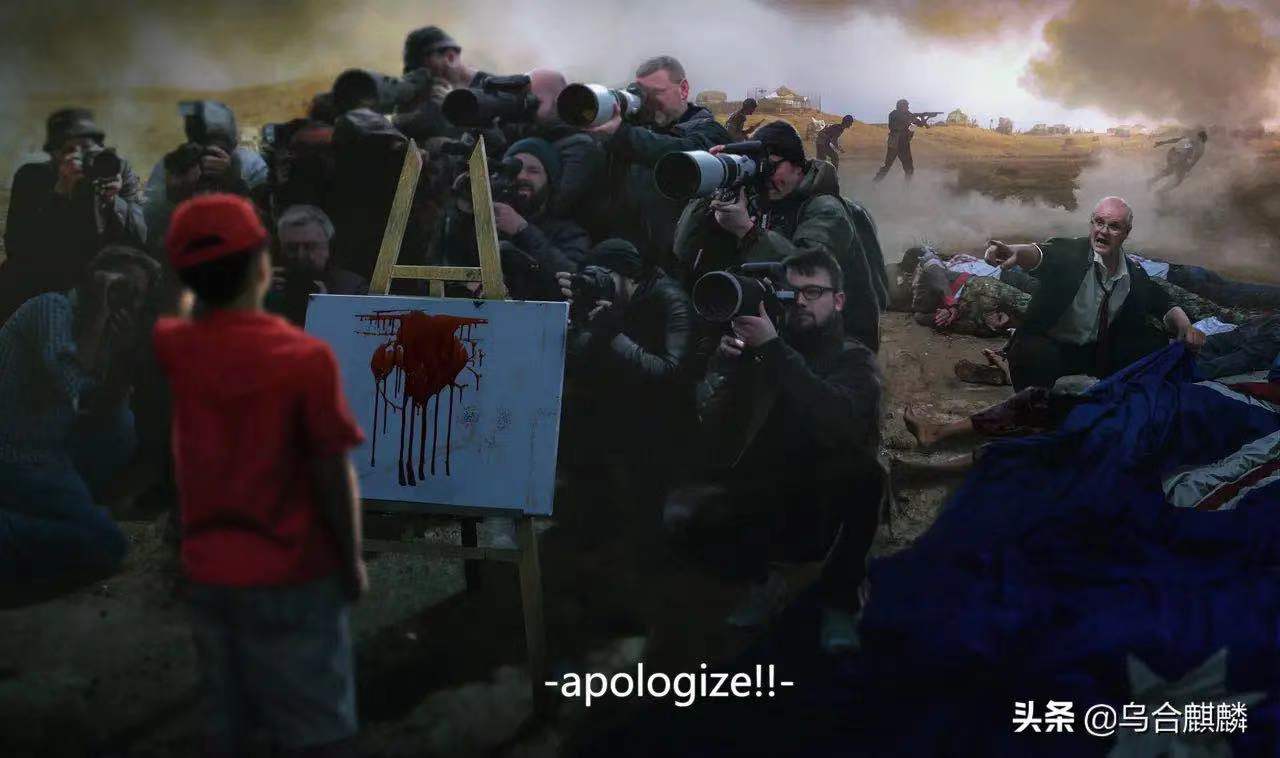
Immediately after the Australian PM’s response to his image of an Australian solider, Chinese political computer graphic artist Fu Yu created another image featuring both himself and Scott Morrison
It has been my privilege to be amongst the first to lay the foundations of Australia’s wine market in China. I’m now very worried about the fate and future of many friends, Chinese and Australian, who helped this country become the number wine supplier to China.
I want the Australian wine industry to be sustainable and profitable. It’s not just about wine, for when it comes to driving economic growth and rural development, the employment of skilled and unskilled people in rural and urban areas, in showcasing and promoting Brand Australia to the world, and in providing the bedrock beneath our uniquely creative food and culinary identity, wine has no peer.
Here is my analysis of what happened between April 26 last year and March 16 this year – the time it took for Australia to lose its largest and most profitable export wine market, and one worth at least AUD 1.3 billion in export income alone.
Australia’s PM Scott Morrison now has the WHO investigation he wanted so badly, and now Australian wine has a crisis it didn’t want at all. It is beyond dispute that the two are related. China has closed its doors to Australian wine. Brand owners dependent on China for sales have lost their primary source of income. All other wine brand owners will now have to deal with a domestic glut the likes of which we have not seen for ages.
That’s just the start of it. For the multitude of industries that support the wine trade, such as logistics companies, packaging goods and chemical suppliers, label printers, oak importers – the list goes on – also face new and potentially alarming challenges. Add to this those industries that hang off wine, like regional restaurants and accommodation suppliers, producers of specialist foods for restaurants, regional tourism attractions, bakeries and specialist food outlets, regional hotels and it looks even worse. All these will face new threats, especially in those regions most dependent on wine sales to China and visits from Chinese tourists.
Even once Chinese tourists are again able to come to Australia, under the recent 5-year impost of punitive tariffs by China’s central government it is extremely unlikely that they will feel as comfortable as before to visit and spend in regions whose wine they cannot take home to China.
This adds up to serious consequences for Australian tourism, rural employment, rural development and infrastructure investment. Sure, Australians might spend more on overseas tourism than inbound visitors do while in Australia, but Chinese tourists typically spend up wherever they go. They typically spend much more than Australians who visit the same place – on food, accommodation, experiences and in the buying of souvenirs and gifts. Australian tourism operators have every right to be very, very worried.
The wine regions most dependent on China will be hit hardest and these include the South Australian keystones of the Barossa Valley and McLaren Vale, along with Langhorne Creek and the Riverlands. The river areas of New South Wales and Victoria will also feel the pinch, along with many of the inland NSW regions.
All of a sudden Australia wine finds itself pitched back into pre-China boom times of institutional over-supply. This will simply be exacerbated as huge volumes of wine destined for China are steadily repatriated into an already crowded domestic market.
How did this happen? Has anyone in Australia the right to be surprised at any of this? The simple truth, which more Australians are now beginning to appreciate, is that the Australian government walked knowingly and fearlessly towards this situation, eyes wide open, towards an inevitable and telegraphed outcome.
Next, our political leadership stood idly by while the US assumed control of Australia’s narrative with China, offering neither comment nor apology. Sort of makes you wonder who has been pulling the strings all this time.
It took less than 12 months to undo 15 years of hard work and investment
On 18 April 2020 Australia’s Foreign Minister, Marise Payne, chose an ABC television program to announce her government’s call for an independent enquiry into the origins of Covid-19.
Eight days later, replying to a question from Australian Financial Review journalist Andrew Tillett asking if there would be economic consequences for Australia if it continued to pursue this line, the Chinese Ambassador to Australia, Cheng Jingye, said ‘maybe the ordinary people will think why they should drink Australian wine or eat Australian beef.’
We could hardly have been more explicitly or emphatically warned.
Less than a year later, on 26 March 2021, China formalised its trade sanctions against Australian wine by imposing a period of tariffs north of 200% for a 5-year period. In itself this hasn’t added much to the temporary imposts already made by China against Australia, but it cements wine amongst the list of industries which now includes thermal coal, barley, beef, copper, cotton, seafood, sugar and timber which then represented combined annual sales to China of around AUD 25 billion.
Two weeks later, on 30 March, the Australian Government got what it wanted – the WHO report. It has sure paid a price for it.
Well, that’s not true. It hasn’t cost our government or our PM anything, yet. It’s the wine industry and related industries which are paying the price.
And, just in case you still believe in fairies, there is no immediate or even short-term alternative market for the annual $1.3 billion of Australian wine that was until recently sold in China. That, actually, is the point. So, what actually happened after 18 April 2020?
Australia’s priceless gift to Europe and South America, or How to Hand Your Largest Export Market to your Competitors
Like many Chinese and Australians who watched this situation go from bad to worse, I still cannot believe what happened. It’s the selective hearing of those running Australia today, who listen only to the voices of national security at the expense of other concerns such as the economic health of our country, that has brought Australian wine and its associated industries to this moment of disaster.
There is no evidence of any thoughtfulness in navigation from the Australian government towards China over the last year and more. Through Chinese eyes – and rather incredulous ones at that – the actions of Australia’s government have trashed the relationship between our countries. In doing so, our PM has revealed more intent to maintain Australia’s right to speak openly on the world stage than to protect the economy and livelihoods of the people and industries he represents.
Incidentally, this is not a party-political opinion; in all my life I have never voted anything but conservative. I also acknowledge the provocative commentary emanating from China, which has indeed become more retaliatory. We started it, though. And given that the trade balance was tilted in our favour, surely we can handle a few insults to protect Australian jobs and rural infrastructure?
Most Australians and media commentators don’t object to our politicians saying what they like, how they like, to whom they like and whenever they like. As a country, we have chosen to place our freedom of speech above our economic wellbeing. However, those Australians whose livelihoods depended on providing wine and tourism resources to the China market might now think rather differently.
Australia should be able make its point on whatever issue it chooses without compromising either its ability to trade, its sovereignty or its national character. We have excellent diplomatic resources and expertise, built on a profound understanding of culture and of the significant differences between cultures. Much of the political failure that has now cost Australia so dearly has to do with de-prioritising our understanding of Chinese culture and a failure to consider how our actions are interpreted by our major trading partner.
Thanks to my China experience, I have a reasonable understanding of how Chinese people interpret the words and actions directed towards their country by the likes of Australia. Here I will try to explain what our politicians either didn’t know or chose to ignore.
Countdown to a meltdown
On 18 August 2020, after a period of informal but effective slowing down of customs and clearance, China announced its Ministry of Commerce had commenced an official enquiry into whether Australian wine was being dumped in the China market, and in so doing affecting the ability of its own wine industry to grow domestically.
Two weeks later another investigation was announced: to determine if Australian wine had benefitted in China as a result of receiving unfair levels of government assistance. I have discussed the merits of both claims elsewhere. Suffice to say, I remain unconvinced either claim is built on solid ground.
Then, on November 17, in the midst of a major dispute with our largest trading partner, our PM visited Japan, a country that has invaded China twice in the last 120 years, to sign agreements that included closer defence ties. You don’t need to be a diplomatic genius to figure the optics of this from the Chinese perspective. And if you don’t think history matters, turn up in Nanjing, as I have done, on the anniversary of the Japanese massacre that began there in December 1937.
Let’s set this in context by remembering that western powers have, over recent centuries, invaded China and taken what they wanted from it – a process that began with the illegal opium trade initiated and perpetrated by the British East India Company. For Chinese people, this happened yesterday. Hardly surprising if they are sensitive to the words and deeds of western countries today…
Next, on 27 November, China announced that from the following day, importers of Australian wine into China would be required to pay anti-dumping deposits between 107.1 to 212.1%, depending on the Australian brand owner. Ouch.
Shortly afterwards, on November 30, our PM then raged at and incorrectly described as a fake or doctored photograph a piece of (undoubtedly political) art created by 27-year-old Chinese artist Fu Yu which had been shared on Twitter by Zhao Lijian, a popular, up-and-coming but still junior official who was not even listed within the CCP’s top 500. Through Chinese eyes, in so doing, he downgraded himself to the same junior level as this Tweeting official. As a consequence, our PM was ridiculed from one end of China to the other.
It’s important to understand exactly what this image really is. While it is still referred to across Australian media as a piece of fake imagery, it is actually a piece of creative if indeed undoubtedly political art described in China as a ‘cartoon’. Had it been a cartoon as we understand it in the Australian style (created by hand and not by computer), I very much doubt anyone would have cared less, however unpleasant and distasteful as indeed it was. It would have been just like many cartoons published in this country, which still apparently stands for freedom of speech.
However, our PM’s incorrect and over the top reaction so shocked the art’s originator that he immediately created another image featuring our own Scott Morrison, no less. Thanks to our PM, this artist has become a cultural icon in his own country.
While this incident did not directly concern wine, it certainly changed the tone of the rhetoric and relationship between Australia and China for the worse. It shows how poorly Australia was interpreting signals from China and would not have encouraged the PM to take a more conciliatory stance.
More recently, the PM has loudly and publicly steered Australia back into the arms of the US, especially with the US-driven reformation of the Quad on March 13, an informal group involving the US, India, Japan and Australia. Noticeable by its absence was the rhetoric of the happier times when Australia signed its FTA with China – there was no mention of Australia’s will to steer its own course between its major defence ally and its major trading partner.
The US throws Australian wine under a bus with Joe Biden dressed as Uncle Sam at the wheel
At a meeting in Alaska on March 19 between top American and Chinese officials, Australia completely lost control of its own narrative. Via Kurt Campbell, the National Security Council’s Asia coordinator, the US made it clear to the Chinese delegation that the US-China relationship won’t improve until China stops its economic coercion against Australia. This message has since been repeated in similar fashion by the US Secretary of State, Antony Blinken and by Michael Goldman, Washington’s top diplomat in Canberra.
Nobody understands more clearly than the US that this kind of rhetoric will simply cause deeper and longer pain from China towards Australia. The US has given China no alternative course – for if China actually does what the US is demanding and what Australian business is praying for, the Chinese government will lose massive face amongst its own population. And, as the US well knows, that is the last thing it will ever do.
A week later came the confirmation of the new tariffs from China for Australian wine. And now the pain really starts…
Thanks to the US, there is little to no chance for this ban to be shifted in the short to medium term. The smartest minds in Australian wine are reconciled to a minimum period of two to two and a half years, given the unlikely proviso that during this time and while taking China to the WTO, Australia’s political leaders can either keep their thoughts on China to themselves or else share them via what used to be known as diplomatic language and channels.
Australia is now relegated to being a bit-player or Exhibit A in a much larger game – the tussle between the US and China that will now play out on our doorstep. And the more petrol the US can pour on the fire between Australia and China, the more the US can insert its own exports into the vacuum left by this country, just as it did with barley.
One day, I hope, our elected officials will realise the extent of the mistake they have made. It will probably take until more Australian wineries and the communities around them to go under for more of their electors to figure it as well.
I hope the PM is happy with his WHO report. And I pray for the future of Australian wine.