

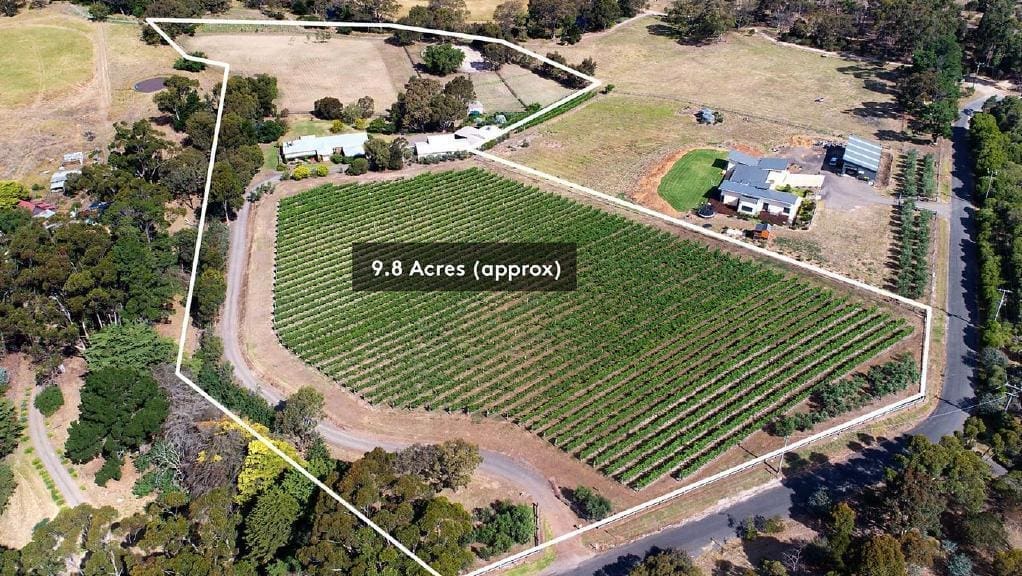
 In a few days time one of the finest and most significant vineyards in Australian wine will be pulled out.
Ruth and Graham Bonney, owners of the Paradise IV vineyard, are shortly to remove the 5 acres of vines they planted between 1988 and 1996 on what is in my opinion one of the greatest vineyard sites on this earth.
About a decade ago I wrote that this small site would produce some of the most influential shiraz ever seen in Australia. I was right. There’s no doubt that despite its tiny production, Paradise IV has improved the breed across the country. That’s all about to end.
The Bonneys have grown tired of managing the vineyard and, having attempted to sell the 10-acre property which includes a modern home and associated buildings, they have decided to stay on the property, but without the vines that have delivered some of the most extraordinary shiraz and chardonnay yet made in this country.
Put up for sale via a local Geelong West estate agent and not a specialist vineyard agency, it would have taken less than $3 million to buy the place. While the vineyard could not hope to provide a reasonable rate of return on this amount, given the increasing rate of return on residential real estate in the area, this was about as fail-safe an investment in world-class wine you could make.
Nestled on the western bank of the Moorabool River at Batesford in Victoria, the property was originally planted in the 1840s by James Henry Dardel was Victoria’s first professional winemaker who made Victoria’s first wines at Yering Station. He planted four vineyards in close proximity to each other – and there’s little doubt that Paradise IV was the jewel in the crown. Dardel’s original vineyard was uprooted after the arrival of phylloxera into the region in 1875, which he might actually have been responsible for.
The site is about as perfect as you could conceive for high-quality cool-climate wine. It faces north east and the soil comprises a top soil of decomposed granite mixed with ironstone. Dig 4–6 feet beneath this and you see a very deep layer of limestone marl that dates back to the time when the area was under water, 23 – 16 million years ago. Summer temperatures are moderated by a gully breeze that blows through from the Barwon Estuary. And finally, given that it ripens so late in the season, rainfall might have been a concern it were not for the fact that it’s in a rain shadow cast by the nearby Dog Rocks.
The vineyard, which could easily be upgraded with the introduction of some different clones, currently produces 450-600 dozen wine each year, which are presently divided between the Dardel Shiraz, the Chaumont (cabernet, shiraz cabernet franc blend) and Chardonnay. The wines retail between $60 and $80, although it has always been my view that the Dardel could easily command $200 or more. The average return on wines sales is $280–300 k per annum, with costs running to $35–50 k. The previous financial year returned a profit of 260k.
Winemaker and co-owner of the Paradise IV brand, Doug Neal, currently makes the wines offsite, although with the re-introduction of some uncomplicated equipment the winery on site could easily handle it all and more.
PLEASE, IF YOU KNOW SOMEONE WHO COULD TAKE ON THIS PROJECT, PLEASE SEND ME AN EMAIL NOW. IT MIGHT NOT YET BE TOO LATE TO SAVE IT. JUST CLICK HERE.
Other Details:
A total of 10 acres with 5 acres under vine planted between 1988 to 1996 to Shiraz, Cabernet and chardonnay. It includes a very well built and solid brick 4 bedroom house, double brick garage, multiple shedding, a winery production area and an underground cellar that can house up to 80 barrels of wine. The land value in this area for elevated sites with a slope is not cheap. A one-acre block in the nearby the estate fetched 600,000k. That’s why the price of the property is at 3 million. The land value is assured, and being 50 min to Melbourne without traffic lights, 10 min to Geelong and 20 min to the Surf Coast, it is ideally situated in a tranquil and peaceful location.
Potential Production: In addition to the 600 to 700 dozen of wine made from the site, there is potential to make and house wine underground that would increase the production to approximately 2,000 dozen. It is the potential to make and house more wine from bought-in grapes, that makes the asset a potentially viable purchase. Further the international marketing of the wines based on their quality, reputation and scarcity would most likely see the bottle prices rise to well over $100 a bottle, with Dardel shiraz having the potential to be over $200 per bottle. This is where the return on the investment starts to become much better.